 |
By Leah Leah also one of the contributors of the execution for the platform design and improvement of Porta SFTP Server. |
In today’s digital era, organizations involved in civil engineering, project management, and business operations handle enormous amounts of sensitive data. From structural blueprints, plumbing schematics, and 3D BIM models to project schedules, financial reports, and compliance documentation, this information underpins both operational success and public safety.
The secure and reliable transfer of these files is no longer optional. Enter Secure File Transfer Protocol (SFTP)—a solution that provides encryption, access control, and auditability, ensuring that critical data reaches the right hands safely and efficiently.
Understanding SFTP
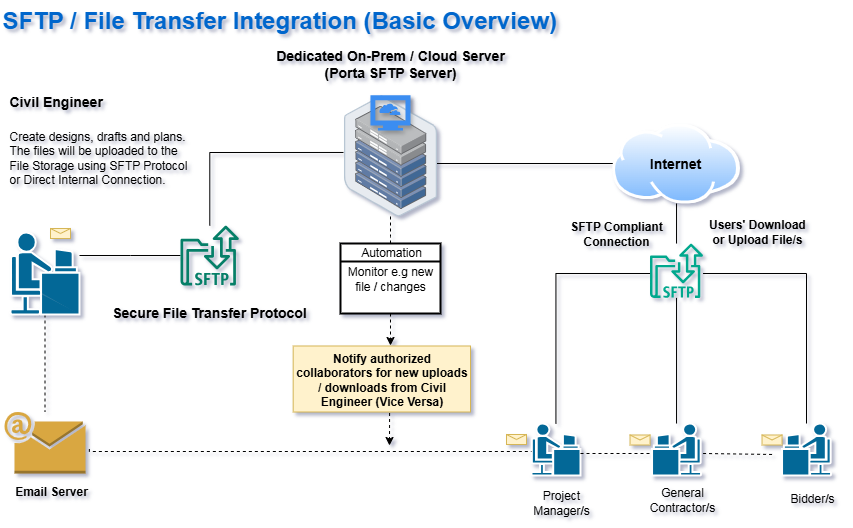
Secure File Transfer Protocol (SFTP) is a network protocol that encrypts both the commands and the data being transferred between systems. Unlike traditional FTP, which transmits information in plain text, SFTP ensures that files cannot be intercepted, modified, or misused during transfer.
Key Features and Benefits:
- Encryption: Uses AES-256 or stronger algorithms to protect files from cyberattacks.
- Authentication: Supports passwords and public/private key authentication to restrict access to authorized personnel.
- Audit Trails: Provides detailed logs for each upload, download, and modification.
- Large File Support: Efficiently handles CAD, BIM, GIS, drone imagery, high-resolution photographs, and videos.
- Automation: Enables scheduled or automated transfers to maintain timely data flow without manual intervention.
- Role-Based Access: Controls which users can access specific files or folders, ensuring sensitive information is shared on a need-to-know basis.
For civil engineers, project managers, and businesses supporting critical infrastructure, these features translate directly into enhanced operational safety, efficiency, and accountability.
Why SFTP Matters for Civil Engineering
Civil engineering projects involve highly sensitive data: structural designs, environmental impact studies, survey data, utility schematics, and construction plans. Any leak, modification, or miscommunication can lead to costly delays, compromised safety, or legal liabilities.
Protecting Critical Infrastructure
Civil engineering projects are the backbone of modern society. Bridges, highways, tunnels, water treatment plants, and stormwater systems rely on precise, secure data for design, construction, and maintenance. SFTP ensures that blueprints, geotechnical data, and structural calculations remain protected from cyber threats.
Practical Applications:
- Water Infrastructure Security: Securely transfer designs for water treatment plants, distribution networks, and pumping stations.
- Structural Safety Assurance: Protect fire suppression systems, emergency exits, load calculations, and high-rise building plans.
- Bridge, Tunnel, and Transportation Integrity: Ensure that inspections, load assessments, and vulnerability analyses remain confidential.
- Disaster and Emergency Planning: Share evacuation routes, contingency plans, and disaster response protocols safely among stakeholders.
Multi-Stakeholder Collaboration
Large-scale projects involve multiple stakeholders: engineers, contractors, regulators, environmental specialists, and municipal authorities. SFTP enables secure real-time sharing of files across regions and organizations, reducing miscommunication, duplication of work, and errors.
Example: A regional highway project distributes CAD drawings, environmental assessments, and traffic impact studies to contractors, engineers, and regulators. With SFTP, all parties access the most current version securely, ensuring alignment across the project lifecycle.
Why SFTP is Critical for Project Management
Project managers coordinate resources, schedules, budgets, and stakeholders—often across multiple locations. Delays or miscommunication can escalate costs and reduce project quality. SFTP strengthens project management by ensuring timely, secure, and reliable access to critical data.
Centralized and Secure File Management
SFTP serves as a single repository for project documents, including contracts, timelines, budgets, reports, and plans. Project managers and teams can access the latest files instantly, preventing confusion over outdated or misplaced documents.
Handling Large, Complex Files
From BIM models and high-resolution drone imagery to geospatial datasets, project files often exceed traditional transfer limits. SFTP allows large files to be transferred quickly, securely, and without corruption.
Automation and Workflow Efficiency
Routine file transfers—weekly progress reports, updated CAD drawings, and compliance documents—can be automated, saving time and reducing manual errors. This ensures all stakeholders have up-to-date information without delays.
Audit Trails and Accountability
Every transfer is logged with timestamps and user credentials, allowing project managers to track access, modifications, and approvals. This transparency supports dispute resolution, compliance audits, and overall project governance.
Example: A construction manager reviewing bridge inspections can verify who accessed the reports and when, reducing the risk of unauthorized changes or miscommunication.
SFTP Benefits for Businesses Supporting Infrastructure
Businesses that provide engineering consultancy, construction services, or utility support handle critical information impacting public safety. Securing these data flows is essential for operational continuity, compliance, and community resilience.
Protecting Operational Data
- Service Continuity: Hospitals, schools, water treatment plants, and emergency services rely on secure access to operational data.
- Infrastructure Maintenance: Inspection logs, repair schedules, and safety system updates must remain confidential.
- Emergency Response Support: Disaster recovery plans, crisis coordination documents, and rapid response protocols are securely shared.
- Supply Chain Security: Product specifications, certifications, and coordination between suppliers and contractors are protected from cyberattacks.
Compliance and Regulatory Advantages
SFTP helps businesses meet global standards for data protection, including GDPR, HIPAA, SOX, and industry-specific regulations. Detailed audit trails, encryption, and controlled access ensure regulatory adherence and reduced liability.
Real-World Applications
- Civil Engineering: Securely share multi-layered bridge designs, tunnel safety reports, and environmental impact studies among engineers, regulators, and contractors.
- Project Management: Distribute BIM models, drone site inspections, and progress reports securely to teams across regions.
- Business Operations: Safely transfer client contracts, financial records, and operational documentation between offices or with third-party service providers.
- Emergency Response: Coordinate disaster recovery plans and critical operational updates across agencies and essential service providers.
SFTP’s Role in Community Resilience
Beyond operational efficiency, SFTP is a community safety tool. By protecting the transfer of infrastructure, project, and business data:
- Accidents, cyberattacks, and disruptions are prevented
- Public health and safety systems remain functional
- Communities benefit from reliable, resilient infrastructure
Strategic Advantages:
- Protect sensitive data for critical infrastructure
- Enable secure collaboration across teams and regions
- Support regulatory compliance
- Reduce operational risks, delays, and errors
- Enhance the resilience of public systems and essential services
Conclusion
For civil engineering firms, plumbing contractors, project managers, and supporting businesses, SFTP is more than a file transfer solution—it is a strategic tool for operational security, efficiency, and community well-being.
Implementing SFTP ensures:
- Sensitive infrastructure and operational data is protected
- Teams can collaborate securely and efficiently
- Regulatory compliance is maintained
- Communities benefit from resilient infrastructure and public services
In an era where data security directly impacts public safety, adopting SFTP is not just a technical choice—it is a commitment to protecting the systems and communities that depend on your work.